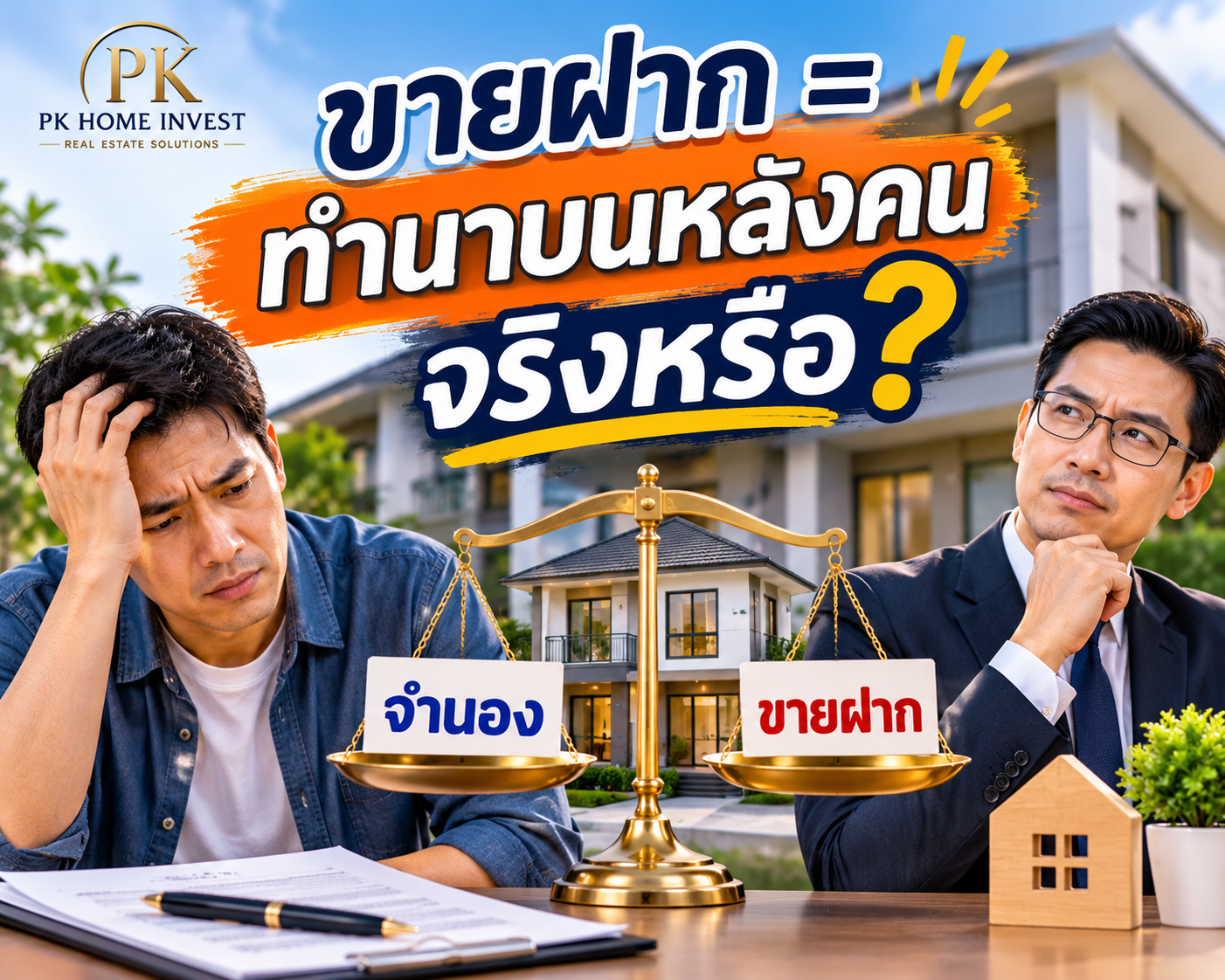
Mortgage and Sale with Right of Redemption: Why Do People Call It "Farming on Others' Backs"? Exploring Another Perspective on a Misunderstood Capital Business
“People are already struggling financially, and yet you still charge them interest? If that’s not called farming on others’ backs, then what is?”
This question often arises when discussing the business of mortgage and sale with right of redemption of real estate.
Some view it as a business that profits from others’ hardship, while others see it as providing capital to those who cannot access bank loans, offering them additional options.
So, who is right?
The answer may not lie in whether you are a creditor or debtor, but rather in how the transaction is conducted and the fairness that actually occurs.
Today, PK HOME INVEST invites you to consider this issue without premature judgment, because the world of mortgage and sale with right of redemption involves much more than just interest rates.
Why Is the Term "Farming on Others’ Backs" Associated with the Sale with Right of Redemption Business?
Imagine a landowner who owns land valued at about 5 million baht but faces a cash flow shortage and urgently needs 2 million baht.
The bank may not approve the loan in time, or the owner may not meet the credit conditions, so they turn to private capital sources.
If someone offers to buy the land with the right of redemption, agreeing on a redemption period, the landowner might accept the offer to solve an immediate problem.
However, if the owner cannot raise the money to redeem the land by the deadline, they may lose land worth more than the money received.
This is where many feel that
“One person is in trouble, but another has the chance to acquire valuable property cheaply.”
This feeling is understandable, especially if the landowner was not fully informed, was pressured to sign the contract, or faced unfair conditions.
However, it is important to distinguish that not all sale with right of redemption transactions end in loss of property, and not all buyers intend to seize the other party’s assets.
Mortgage and Sale with Right of Redemption: More Different Than You Think
The key difference lies in ownership rights.
Mortgage: The owner retains ownership but uses the property as collateral for debt. If default occurs, the creditor must follow legal foreclosure procedures.
Sale with Right of Redemption: This is a sale where ownership transfers to the buyer upon registration, but the seller retains the right to redeem the property within an agreed period.
Therefore, saying “both are just using land as collateral” can be misleading because the risks involved in these two transactions differ significantly.
This is why explaining the contract clearly before signing is more important than rushing to close the deal.
What’s Wrong with Charging Interest to People in Financial Distress?
Try looking at it from another angle.
A person who lends 2 million baht for one year incurs costs and risks, such as:
Opportunity cost of not investing the money elsewhere
Risk that the borrower may default or fail to redeem
Need to verify ownership documents, encumbrances, and property value
Possible expenses related to legal processes and disputes
Receiving a return on capital is not inherently wrong.
Banks charge interest, shareholders expect returns, and real estate investors assess risks accordingly.
The issue is whether the return is reasonable and whether the lender is exploiting the borrower’s hardship as an unfair bargaining tool.
This is the line between responsible business conduct and behavior that may be perceived as exploitation.
Legal Does Not Always Mean Fair
For sale with right of redemption of agricultural or residential land under the Protection of the People in Sale with Right of Redemption of Agricultural or Residential Land Act B.E. 2562 (2019), the law caps returns calculated as interest at no more than 15% per year.
Consider a hypothetical example:
A landowner receives 2,000,000 baht with a contractual return of 12% per year.
Simply calculated for one year, that equals 240,000 baht.
Total repayment would be 2,240,000 baht before other expenses and legal calculation details.
For investors, this may seem like a return commensurate with risk.
But for someone with uncertain income, raising over 2.2 million baht within a year can be very difficult.
So the question is:
From day one, did the seller have a realistic plan to redeem the property?
If the answer is no, even a transaction within the legal return cap can cause severe harm to the property owner.
Note: Figures are hypothetical examples, not transaction offers. The stated return cap does not apply to all mortgage or loan contracts.
The Bigger Problem Is Not Just Interest but Bargaining Power
Compare two people:
One has 10 million baht in cash and no urgent need to invest.
The other owns a house or land but must raise money within 7 days to solve a business problem.
Who has more bargaining power?
The answer is clear.
The person with limited time and options may accept unfavorable terms they would not choose under normal circumstances.
This is where lenders should exercise special caution.
A proper contract should disclose all costs, explain consequences of default, and allow adequate time for consideration.
A debtor’s willingness to sign does not always mean full understanding of all risks.
https://www.pkhomeinvest.com/th/news/31
What Should Good Mortgage or Sale with Right of Redemption Investors Do?
PK HOME INVEST believes that building long-term credibility in this business starts with simple principles.
1. Prioritize the Borrower’s Ability to Repay, Not the Chance to Acquire Property
Before accepting a transaction, assess the source of funds for repayment or redemption, such as business income, sale of other assets, or documented capital.
If there is no realistic plan, acknowledge the high risk of the transaction despite the property’s value.
2. Do Not Use Property Value Exceeding the Loan Amount as an Excuse to Neglect Fairness
A house valued at 5 million baht with a 2 million baht loan does not mean the investor should view the 3 million baht difference as guaranteed profit.
Collateral valuation is for risk management, not a motivation to push the other party into losing their property.
3. Explain All Figures Before Signing
How much money is actually received?
What are all the costs?
How much must be repaid or redeemed?
What is the final deadline?
What happens if the deadline is missed?
If these questions cannot be answered clearly, do not rush into signing.
4. Emphasize Proper Documentation and Legal Rights
Mortgage and sale with right of redemption of real estate must be properly registered.
For sale with right of redemption under the 2019 protection law, there are rules on redemption periods, early redemption rights, notifications, and asset deposits to preserve rights.
Both sellers and buyers should understand their duties.
5. Do Not Use Fear or Urgency to Pressure Decisions
Statements like “If you don’t sign today, you won’t get money tomorrow” can cause distressed people to make hasty decisions.
A good business should not rely on customers’ panic to close deals.
Update 2026: Laws Already Protect Sellers with Right of Redemption
This is important because many still believe buyers can dictate all terms.
For transactions under the Protection of the People in Sale with Right of Redemption of Agricultural or Residential Land Act B.E. 2562, key provisions include:
Redemption period not less than 1 year and not more than 10 years
Sellers have the right to redeem before the deadline as per law
Legal cap on returns
Buyers must notify before redemption deadline according to regulations
Provision for asset deposits to preserve rights when required by law
The Department of Lands issued warnings in 2026 about misunderstandings in sale with right of redemption, especially regarding immediate ownership transfer and redemption deadlines.
However, this law does not automatically cover all types of real estate sales with right of redemption, so property type and applicable laws must be reviewed case by case.
If You Are in Financial Trouble, What Should You Do Before Mortgaging or Selling Your Land with Right of Redemption?
Don’t just ask who offers the highest loan amount.
Ask yourself first: “Where will I get the money to close this transaction?”
Consider other options such as debt restructuring with existing creditors, applying for loans from licensed financial institutions, selling part of your assets, or finding partners with reasonable terms.
If you must mortgage or sell with right of redemption, have an independent expert review the contract and do not sign documents you do not fully understand.
This is especially important for family homes or agricultural land, which are vital life assets.
Frequently Asked Questions
Is accepting mortgage or sale with right of redemption considered "farming on others’ backs"?
It cannot be judged solely by the transaction name. Conditions, returns, transparency, parties’ understanding, and actual behavior must be considered.
Is sale with right of redemption legal?
Sale with right of redemption is a legal act recognized by Thai law but must comply with relevant requirements, especially registration and applicable protection laws.
Is mortgage always safer than sale with right of redemption?
Mortgage has different ownership and foreclosure procedures than sale with right of redemption but still carries risk of property loss upon default. It should not be considered safe unconditionally.
Can the buyer expect to acquire the property if the seller fails to redeem on time?
If redemption is not made by the deadline, ownership may legally transfer to the buyer. However, intentionally exploiting the other party’s hardship or ignorance to acquire property cheaply may lead to disputes and fairness concerns.
Summary: Capital Business Does Not Have to Be Farming on Others’ Backs
Lending capital has costs, risks, and reasons for investors to expect returns.
At the same time, debtors’ homes and land are not just numbers on a balance sheet.
Some plots are family inheritances; some houses have been lived in for decades.
Professionalism in investing should be measured not only by the percentage of return but also by how that return is achieved.
At PK HOME INVEST, we believe good real estate investment starts with knowledge, transparency, risk management, and responsibility to contracting parties.
A sustainable business should not grow at the expense of others’ harm.
“Good profit is not just legal profit but profit we can explain with pride.”
This article is for educational purposes and expresses general principles, not legal advice or personalized investment recommendations. All examples are hypothetical. Legal information is accurate as of October 20, 2026.